Monday, March 7, 2011

Chapter 14


Questions :

What is taxonomy and why do we use it ?

Taxonomy is the branch of biology that names and classifies species. We can either classify organisms based on their phenotypical features or based on their ecological role or we can recognize species that represent specific evolutionary lineage. We use taxonomy to make order and to observe similarities and traits of in
terest throughout the history.

What is sympatric speciation ?

Sympatric speciation - new species arise within the same geographic area as parent species. This speciation is very important. There have been many issue when people brought species from different countries into new environment which cause issue to the natural environment. That's why new species arise only within the same geographic area. They have natural environment there and also natural predators and food to consume.

What is prezygotic barrier ?

Prezygotic barrier prevents mating or fertilization between species. There are main five types : temporal isolation, habitat isolation, behavioral isolation, mechanical isolation and gametic isolation. Animals have these barriers to prevent closely related species from interbreeding.

Diagram :
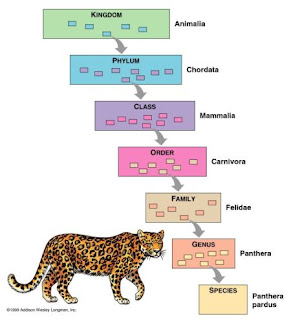
This diagram shows an example of taxonomy. We list species in specific order which helps us to recognize where the animals belong and their closely relates species.

5facts:

Groups isolated by diet or female mate choice may have lost the ability to interbreed.

Every time speciation occurs, the diversity of life increases.

Carolus Linnaeus developed binomial system naming of organisms.

The process of speciation depends on whether reproductive barriers prevent gene flow between populations.

The occasional hybridization between finch species introduces new genes into both populations.

Key terms :
reproductive barrier - biological feature, to prevent individuals of closely related species from interbreeding
temporal isolation - prezygotic barrier (PB), occurs when species breed at different time
habitat isolation - PB, two species live in the same general area but not in the same kinds of places
behavioral isolation - PB, there is little or no sexual attraction between females and males of different species
mechanical isolation - PB, female and male sex organs are not compatible
gametic isolation - PB, gametes of two different species do not unite to form a zygote
allopatric speciation - populations are separated by geographical barrier
polyploid - cells have more than two complete sets of chromosomes
hybrid zones - regions in which members of different species meet and mate
adaptive radiation - evolution of many diverse species from a common ancestor

Video :

Summarize:
Chapter 14 continues to describe the process of evolution. Although this time the chapter more concentrates on speciation of species and different barriers that prevent species from interbreeding. The chapter also talks about hybrids and their process of evolution.

Chapter 13

Questions :

What are fossils and why do we need them ?

Fossils are preserved remains or traces of animals, plants and other organisms from past. We use fossils to date the different periods in Earth's life evolution. They are essential prove of Darvin's evolution theory.

Who is Darwin and where did he travel ?

Charles Darwin is an English naturalist. He established what we know today as an evolution theory. He published his theory with evidence in 1859 in book called On the Origin of Species.
His most known research comes from Galapagos Islands even though he traveled throughout the world to acquire his evidence.

What is adaptation ?

Adaptation is evolutionary process whereby a population becomes better suited to its habitat. This process takes place over many generations. It's also one of the basic phenomena of biology.


Diagram :
This diagram shows an example of evolution and natural selection in a specific animal specie.


5facts:

Individuals do not evolve, populations evolve.

Natural selection can amplify or diminish only heritable traits.

Evolution is not goal directed and does not lead to perfection.

Living organisms are adapted to their environment.

Favorable traits accumulate in a population over generations.

Key terms :
extinction - irrevocable loss of species
fossil record - sequence in which fossils appear within layers of sedimentary rocks
strata - rock layers
paleontologist - scientist who studies fossils
homology - similarity in characteristics resulted from common ancestry
vestigial organs - structures of marginal or perhaps no importance to the organism
population - group of individuals of the same species
mutation - change in the nucleotide sequence of DNA
gene pool - total collection of genes in a population at any one time
sexual selection - form of natural selection in which individuals with certain characteristics are more likely than other individuals to obtain mates

Video :

Summarize :

Chapter 13 introduce deeper informations about Darwin's theory of evolution and little bit of history behind this big scientific theory. Also we learned about fossils and their study. Since we talked in this chapter about Darwin we also talked about evolution theory and learned some new terms. For example Hardy-Weinberg equation etc.. At the end we learned mechanisms of microevolution.

Sunday, March 6, 2011

Chapter 12


Questions :

What is forensics ?

Scientific analysis of evidence for crime scene investigations and other legal proceedings. Forensics involves DNA identification, finger prints etc...

Why do we need forensics ?

Forensics helps us to validate people that were at the crime scene. Due to forensics we can identify people's DNA and thus have a better evidence in solving the crimes. The first time DNA technology was used to solve a crime was in 1986 by Alec Jeffreys.

Diagram :

This diagram shows how gene therapy can help treat certain diseases by altering viruses DNA so it helps the body to heal.

5facts:

Vaccine is harmless variant of a pathogen, used to mount system against that pathogen

Genetically modified organisms are ones that required one or more genes by artificial means

STR analysis is a method of DNA profiling that compares the lengths of STR sequences at specific sites

PCr method is use to amplify DNA sequences.

Recombinant cells and organisms can mass-produce gene products that later on are used to treat certain diseases

Key terms :
plasmids - small circular DNA molecules that replicate separately from the much larger bacterial chromosome
genomic library - DNA fragments from a genome
vector - gene carrier
transgenic organism - recombinant organism
DNA profiling - analysis of DNA fragments
primers - short chemically synthesized single-stranded DNA molecules with sequences that are complementary to sequences at each end of the target sequence
genomics - science of studying a complete set of genes
transposable genes - genes that can move or be copied from one location to another
repetitive DNA - DNA that consists of nucleotide sequences that are present in multiple copies

Video :

Summarize :

This chapter gave us an overview of different uses of genes. We can either solve crimes, modify plants and animals, categorize genes etc.

Chapter 11


Questions:

What is operon ?

It's a unit of genetic regulation common in prokaryotes; cluster of of genes with related functions, along with the promoter and operator that control their transcription.

How is DNA packed ?

Crucial role in DNA packing play proteins called histones. They protect packed DNA from being expressed. Also the DNA itself is wrapped around these proteins in formations called nucleosome.

What is cloning ?

Cloning is a process of creating new individual with genetic informations same as from the donor. There are two types of cloning : reproductive and therapeutic. Reproductive cloning creates a new individual with the same genetic informations as the donor. Therapeutic cloning uses embryonic stem cells to create specialized cells that are needed.

Diagram :
This diagram shows the process of cloning.

5facts:

Female mammals have one inactive X in each somatic cell.

Cascades of gene expression direct the development of an animal.

Stem cells are cells with no specialization.

Stem cells have a great medical potential.

Human reproductive cloning raises a lot of ethical issues. For example : to get stem cell we have to destroy embryo which in some cultures represents life.

Key terms :
gene expression - process by which genetic information flows from genes to proteins
histones - small proteins associated with DNA packing
differentiation - process of becoming specialized in function and structure
silencers - DNA sequence that stimulates the gene transcription
enhancers - DNA sequence that functions to inhibit the start of gene transcription
homeotic gene - master control gene
DNA microarray - glass slide with thousands of different kinds of single-stranded DNA fragments
regeneration - regrowth of lost body part
adult stem cells - cells capable of giving rise to many but not all the types of cells
oncogene - gene that can cause cancer

Video :

Summarize :

This chapter was mainly about gene expression. The way genes are turned on a off and also this chapter described the process of cloning.

Chapter 10


What is DNA ?

DNA is genetic material. This fact was proved by Hershey and Chase. They did an experiment with bacteriophages in 1952. They labeled proteins and DNA by radioactive material. Due to this experiment that radioactively labeled DNA entered the host cell not the protein. This discovery supported the theory that DNA is radioactive material.

What is DNA and RNA composed of ?

DNA and RNA strands are called polynucleotides. Nucleotide is the basic unit. It's composed of phosphate group, sugar (ribose for RNA, deoxyribose for DNA) and nitrogenous base. There are 5 types of nitrogenous bases : Thymine, cytosine, adenine, guanine (these four can be found in DNA) and uracil (instead of Thymine there's an uracil in RNA).

How is DNA expressed ?

To have the genetic information expressed DNA must go through process of transcription and translation. During transcription DNA is transcribed into RNA molecule. Translation then translated those molecules into polypeptide chain.

Diagram :
This diagram shows a structure of DNA. Double-stranded helix and it also shows base pairing. with hydrogen bonds.

5facts:

DNA was proved to be genetic material in 1952 by Hershey and Chase.

Thymine (Uracil) pairs only with Adenine.

Guanine pairs only with Cytosine.

Watson and Crick were first to create the model of DNA.

Thymine and Cytosine are called Pyrimidines and Adenine and Guanine are called Purines.

Key terms :
bacteriophages - bacterial viruses
nucleotides - chemical units composed of nitrogenous base, phosphate group and sugar
double-helix - presence of two strands
semiconservative model - half of the parental DNA is maintained in each daughter molecule
DNA polymerase - unravels the DNA strand
DNA ligase - links the DNA strands back together
transcription - transfer of genetic information from DNA into RNA molecule
translation - transfer of the information in the RNA into a protein
genetic code - set of rules giving the correspondence between codons in RNA and amino acids in proteins
promoter - specific binding site for RNA polymerase


Video:

Summarize :

Chapter 10 give us an overview of the history of discovering the DNA and also the composition as well as its function and the way it functions, replicates and expresses genes.


Saturday, December 11, 2010

Chapter 9

Questions :
What are Mendel's four hypothesis ?
There are alternative versions of genes that account for variations in inherited chracters.
For each character, an organism inherits two alleles, one from each parent.
If the two alleles of an inherited pair differ, then one determines the organism's appearance and is called the dominant allele,the other has no noticeable effect and is called and is called the recessive allele.
A sperm or egg carries only one allele for each inherited character because allele pairs separate from each other during the production of
gametes.

How technology helps find the chromosomal disorders ?
Due to new technologies we are to get tested for chromosomal disorders. For examples fetal testing, during which the doctor is able to detect harmful genetic conditions of the child, such as Down syndrome etc.... This testing is very helpful because our recessive alleles don't show themselves until we passed them on then they might have chance to affect the genes which could cause some harmful effects.

What is the difference between phenotype and genotype ?
Phenotype is genetic composition that is expre
ssed by organisms. This could be eye color, shape of nose, skin color etc.. On the other hand genotype is the genetic information that is inside the DNA. These are the traits that we're not able to see but we can pass them on and they could show in the next generation.

Diagram :
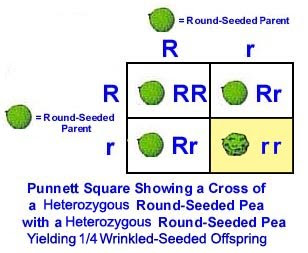
This diagram shows Punnett square. This square helps to discover the genetic combination if you have two heterozygous plants reproduce.

5facts:

Sex-linked disorders affect mostly males.

One single gene is capable of affecting many phenotype characters.

Environment we are living in may affect many characters.

We have two types of disorders recessive cause by the recessive gene and dominant disorders cause by the dominant gene.

Punnett square shows the possible gene combination based on the Mendel's hypothesizes

Key terms :
Alleles - alternative versions of a gene
Homozygous organism - organism that has two identical alleles
Heterozygous organism - organism that has two different alleles
Phenotype - organism's physical traits
Genotype - organism's genetic traits
Character - heritable feature
Trait - variant for a character
Hybrids - offsprings of two different varieties
Complete dominance - the dominant allele had the same phenotypic effect whether present in one or two copies
Incomplete dominance - some character's phenotype falls between two parental varieties


Video :

Summarize :

Chapter 9 gives a lecture about genetic informations and how are genes inherited. It describes Mendel's hypothesis and Punnett square which shows us the probability of inherited factors.

Chapter 8


Questions:
What are the phases of mitosis ?
First is interphase which lasts the longest time (about 90% of cell's life cycle) during this phase cell performs normal actions. Also this p
hase is divided into 3 sub-phases G1, S (division of DNA), G2. After interphase prophase follows. During prophase cell looses the nucleus and chromosomes become visible. Then there's prometaphase during this phase spindle is created. At metaphase chromosomes align on the metaphase plate. Then during anaphase the chromosomes separate and move toward the pole's of the cell. Telophase is finishing up the division and cytokinesis divides cytoplasm.

What is the difference between cytokinesis and mitosis ?
Cytokinesis represents the process of cytoplasmic division. Also during cytokinesis the cell finally separates into two daughter cells. On the other hand mitosis represents only the division of nucleus and chromosomes.

What is the difference between the products of Mitosis and Meiosis ?
The main difference between the products of Meiosis and Mitosis is that Meiosis produces cells with haploid number of chromosomes (23 for humans); Meiosis leads into creation of four daughter cells not two and these four cells are sex cells (sperm and egg).

Diagram:

This diagram shows Mitosis. The process and sub phases of Mitosis are described in Question 1.

5facts :

Mitosis is cell division.

Due to cross overs during Meiosis the daughter cells have different genetic variation than parent cells.

Meiosis produces four haploid cells and mitosis produces two diploid cells.

Karyotype is display of magnified images that helps the doctor diagnose any chromosomal diseases.

Down's syndrome is one of the most common chromosome number abnormality.

Key terms :
Karyotype - display of magnified images of an individual's chromosomes
Genetic recombination - the production of gene combinations different from those carried by the original chromosomes
Diploid cells - cells with two homologous sets of chromosomes
Haploid cells - cells with a single chromosome set
Fertilization - process when egg and sperm fuse together
Zygote - the resulting fertilized egg
Sex chromosomes - X and Y chromosomes
Autosomes - 22 pairs of chromosomes (sex chromosomes are not included)
Somatic cell - typical cell in human body
Tumor - an abnormally growing mass of body cells

Video :

Summarize : Chapter 8 was presenting Mitosis and Meiosis. The process of cell reproduction and also the abnormalities that can arise from mistakes during the cell division.


Friday, December 10, 2010

Chapter 7

Questions:

Why is photosynthesis so important ?
Photosynthesis creates oxygen out of CO2. That is very important especially for living organisms that need oxygen to be able to breathe.

What does photosynthesis use to make energy ?
At first the plant absorbs light and uses H2O to produce O2. During this time photosynthesis also creates NADPH and ATP so the plant can use it in second process to create sugar out of CO2

What happens during Calvin cycle ?
Calvin cycle occurs in the stroma of the chloroplast. It is a serie of r
eactions that assembles sugar molecules using CO2 and the energy containing products of the light reactions. this stage is named after Melvin Calvin. During this stage happens the most important process the change from inorganic material into organic material.

Diagram :
This diagram shows overall process of photosynthesis. It also shows the flow of ATP and NADPH between the Photosystem I and II and Calvin cycle , which is very important for the phases of photosynthesis.

5facts:

Light reactions include the steps that convert light energy into chemical energy.

Chlorophyll a is light-absorbing pigment in the chloroplast. Chlorophyll plays main role during photosynthesis.

Plants produces O2 as a secondary product of photosynthesis.

Some plants such as C4 and CAM plants are able to save water better than C3 plants, because they first fixate CO2 into a four-carbon compound not three-carbon compound (Calvin cycle).

Photosynthesis can be divided into 2 phases. 1 is when the plant needs light and the 2 is when plant can sustain the process of photosynthesis without light.

Key terms :
Mesophyll - green tissue in the interior of the leaf
Thylakoids - interconnected membranous sacs
Stroma - thick fluid filling up chloroplast
Chlorophyll - light-absorbing pigment
Photoautotrophs - organisms that are able to produce organic molecules from inorganic molecule using the energy of light
Photon - fixed quantity of light energy
Wavelength - distance between the crests of two adjacent waves
Photosystem - consists of a number of light-harvesting complexes
C3 plants - called because the first organic compound produced is three-carbon compound 3-PGA
Global warning - slow but steady rise in the Earth's temperature

Video :

Summarize :

This chapter explained the process of photosynthesis. The way plants can transform inorganic molecules into organic molecules. It described the way the light is accepted by chlorophyll and how the process continues inside Photosystems I and II and how it finishes up in Calvin cycle

Chapter 6

Questions :
What are the three main stages of cellular respiration ?
First stage is Glycolysis (breaking of glucose into pyruvate); the second stage is the Citric acid cycle (completes the the breakdown of glucose by decomposing a derivative of pyruvate to carbon dioxide); the third stage is Oxidative phosphorylation (here is generated H+ concentration and and thanks to electron transport chain the H+ molecules are transported back during chemiosmosis to generate A
TP).

What can interrupt cellular respiration ?
Certain poisons can block the cellular respiration. For example Cyanide and carbon monoxide, they bind with an electron carrier in forth protein complex. Cause of that electron cease to flow through and this stops the cellular respiration.
Another poison is oligomycin which blocks the passage of H+ through the channel in ATP synthase.

What is the outcome of ATP's for each phase ?
Glycolysis produces outcome of 2 ATPs and 2 NADH. Citric acid cycle produces 2 ATP, 6 NADH and 2 FADH2 . The oxidative phosphorylation produces the biggest number of ATP about 34 ATP molecules.

Diagram :

This diagram shows the citric acid cycle during which we breath out CO2. It's very complex cycle of reactions that repeats twice per molecule of glucose.

5facts :
Oxidative phosphorylation creates the biggest outcome of ATP (around 34).

Photosynthesis and cellular respiration provide energy for life.

C6H12O6 +6O2 -> 6CO2 + 6H2O + ATP energy - this is equation of cellular respiration.

Certain poisons are able to stop the process of cellular respiration .

Fermentation enables cells to produce ATP without oxygen.

Key terms:
Redox reaction - movement of electrons from one molecule to another
Oxidation - loss of electrons from one substance
Reduction - gain of electrons from one substance
Obligate anaerobes - prokaryotes that are poisoned by oxygen, they require only anaerobic conditions
Facultative anaerobes - can make ATP by either fermentation or oxidative phosphorylation
Lactic acid fermentation - process that enables the cell to create ATP without oxygen, some types of bacteria can regenerate NAD+
Intermediates - compounds that form between the initial reactant and the final product
Glycolysis - begins cellular respiration by breaking glucose into pyruvate
Kilocalories - the quantity of heat required to raise the temperature of 1 kilogram of water by 1C

Video :

Summarize:

Chapter 6 described the cellular respiration. Basically the process that is going on inside our body everyday. It described the Citric acid cycle which is very important because it's the cell breathing. During this process we breath in O2 and breath out CO2. Also this chapter explained other phases of cellular respiration as well, such as glycolysis and oxidative phosphorylation during which our cells create most of ATP molecules.

Friday, October 15, 2010

Chapter 5

Questions :
What do we need enzymes for ?
Enzymes are proteins that function as biological catalysts. What that means is for every reaction in our bodies we need certain energy which is called activation energy (Ea). What enzymes do is that they decrease this activation energy without being consumed by the reaction. So in the end we need enzymes to help our body be more efficient and to be able to process more biological reaction with less energy.

What are the Thermodynamic laws ?
thermodynamic is the study of energy transformations. The first law of thermodynamics explains that the energy of universe is constant; energy can be transferred and transformed but not created. the second law of thermodynamics is that during every energy transfer or transformation some energy becomes unusable.

What is osmosis ?
Osmosis is the diffusion of water across a selectively permeable membrane. This membrane allows some substance to cross more easily than others. The perfect scenario is when there's perfect balance between the water and solute concentration (when the cell volume is constant) is called isotonic. Hypertonic is when the water goes out of the cell on the other hand hypotonic is when water comes into cell which makes the cell to increase its volume

Diagram :

This diagram shows how the enzyme decreases activation energy to make more reaction happen without being consumed by the reaction .

5facts:
Selectively permeable membrane is important in keeping the cell's volume constant. This membrane manages what substances will go in the cell and which won't.

ATP powers nearly all forms of cellular work.

Exergonic reaction are those that releases energy, endergonic are those which consume energy.

Every working cell in every organism carries out thousands of exergonic and endergonic reactions. The total of an organism's chemical reactions is called metabolism

Exocytosis is a name of process that exports bulky materials such as proteins outside of the cell.

Endocytosis is a transport process that is the opposite to the exocytosis.

Key terms:
Active transport - in this process a cell must expend energy to move a solute against its concentration gradient
Diffusion - the tendency for particles of any kind to spread out evenly in an available space
Passive transport - the diffusion of a substance across a biological membrane
tonicity - term that describes the ability of a solution to cause a cell to gin or loose water
osmoregulation - control of water balance
kinetic energy - the energy of a motion
potential energy - stored energy that possesses as a result of its location or structure
energy - the capacity to perform work
chemical energy - term that refers to the potential energy available for release in a chemical reaction
cellular respiration - chemical process that uses oxygen to convert the chemical energy that the cell can use to perform work

Video :

Summarize :
The chapter name Working cell tells us a lot about this chapter it describes function it performs, effects of enzymes, and all other important things such as the thermodynamic laws and the effects of solute and water concentration .

Thursday, October 14, 2010

Chapter 4

Questions:
1. Why do we need microscopes ?
Microscope is very important invention. It increases the ability of our vision because it magnifies very small objects. Due to this characteristic of microscopes we were able to go a step further in discovering the components of life such as cells atoms and even smaller particles. Before microscope we haven't had an idea of what are living organisms composed of.

2. What does the cytoskeleton do ?
Cytoskeleton is network of protein fibers that helps to organize and maintain structure of the cell and its organelles. We have 3 different types of protein fibers: Microfilaments (form a network that helps support the cell shape); Intermediate filaments (serve to reinforce the cell shape and to anchor certain organelles); Microtubules (they enable movement for cell).

3. What are the main differences between prokaryotic and eukaryotic cell ?
Prokaryotic cells are structurally simpler than eukaryotic cells. Prokaryotic cells lack nucleus, they don't have a membrane around surrounding DNA, ribosomes in prokaryotic cells are smaller than in eukaryotic. Eukaryotic cells on the other hand are more complex and those types of cells are the one found in many complex organisms like humans, plants, animals etc....
Eukaryotic cells have various organelles that maintain the functions of cell, for example : Golgi aparatus, ER, Lysosomes, Chloroplast etc....


Diagram :


On the left side of diagram is shown animal cell (prokaryotic cell) on the right is prokaryotic cell. This diagram shows the main differences between those two types of cells. As you can see prokaryotic cell is lacking nucleus and eukaryotic cell has a various number of organelles.

5facts:

Cilia and flagella move when microtubules bend, which enables the movement of cell

Plant's cell chloroplast are very important throughout the process of photosynthesis

Endosymbiosis it's a theory that mitochondria and chloroplasts were formerly small prokaryotes that began living within larger cell.

Many organelles are connected through endomembrane system

We have two types cells that differ in their structures and that is prokaryotic cell and eukaryotic cell

Key terms :
chromosomes - carry genes made out of DNA
cytoplasm - entire region between the nucleus and the plasma membrane
cellular metabolism - many of the chemical activities of cell
organelles - membrane bounded structures perform specific functions in the cell
nucleus - contains most of the cell's DNA and controls the cell's activities by directing protein synthesis
Ribosomes - cellular components that carry out protein synthesis
Mitochondria - organelles that carry out cellular respiration in nearly all eukaryotic cells
Peroxisome - organelle that is not part of the endomembrane system; included in the breakdown of fatty acids
Lysosome - consists of digestive enzymes enclosed in membranous sac; digesting process
Vacuoles - membraneous sac with various functions such as hydrolitic (absorbs water)

Video :

Summarize :

This chapter is talking about the cell and it's basic structure. It describes all organelles and their function for example Nucleus is surrounded by porous nuclear envelope, the nucleus contains the DNA that carries the cell's hereditary blueprint. Also it divides the cell's organelles into group by their function and gives us the basic cell structure and types.


Tuesday, October 12, 2010

Chapter 3

Question :

What are the organic compounds ?
Organic compounds are carbon based molecules. Carbon is able to form 4 bounds at most. So for example methan's structure is CH4. Another characteristic for carbon is that he's able to create large and diverse molecules. Also the chain of carbon atoms in organic molecules is called a carbon skeleton.

What are the characteristic chemical groups of organic compounds ?
These chemical groups are called functional groups. They have affect on the molecules functions.
Among those functional groups are :
Hydroxyl group - consists of -OH group connected to a carbon skeleton
Carbonyl group - consists of >C=O group connected to a carbon skeleton. There are two types of carbonyl group Aldehyde and Ketone
Carboxyl group - this functional group is -COOH
Amino group - NH2
Phosphate group - OPO3
Methyl group - CH3

What are the different types of macromolecules found in our body ?
The names of these group are lipids, proteins, nucleic acid and carbohydrates.
Lipids are very large molecules composed of glycerol and fatty acid tail. By breaking down the lipids a huge amount of energy is released.
Proteins are polymers constructed from amino acid monomers. The connection between proteins is called peptide bond.
Nucleic acids are very information-rich polymers of nucleotides. We know two types of nucleic acids and those are DNA and RNA.
Carbohydrates also known as saccharides or sugars. Sugar is source of fast energy they don't produce as big amount of energy as lipids but they are really fast.

Diagram :

This diagram shows the basic monosaccharide glucose. Glucose is main saccharide that is contained in most of polysaccharides. It's also part of process called photosynthesis. It's really important sugar.

5facts :
Nucleic acids are very important in giving informations and controlling processes inside the cells and molecules as well as throughout the whole body.

Lactose tolerance is is a recent mutation in the human genome that allows us to drink milk and digest the sugar contained in the milk Lactose.

All functional groups differ in a specific way and also have different function and differ in a way they influence other cells.

Anabolic steroids are synthetic variants of the male hormone testosterone. It causes buildup of muscle and bone mass. They can also be used as prescription drugs. On the other hand it's very often abused mainly by athletes who are trying to gain muscle mass.

Denaturation is a process when protein's loose their specific shape and their function as well.It can be cause due to temperature change, pH change and salt concentration. In some cases this process can't be reversed causing a serious damage.

Key terms :
carbon skeleton - chain of carbon atoms in an organic molecule
organic compounds - carbon-based molecules
monomers - building blocks of polymers
macromolecules - gigantic and four main main classes of large biological molecules
hydrophobic - "afraid of water" molecule doesn't dissolve in water
hydrophilic - "loving water" molecule does dissolve in water
steroids - lipids containing for fused rings. Mainly known as anabolic steroids which are often being abused
saturated lipids - lipids which have maximum number of hydrogens
unsaturated lipids - lipids which don't have a maximum number of hydrogens
enzymes - are specialized macromolecules that speed up chemical reactions in cells.

Video :

Summarize :
Chapter 3 introduced to us the main compounds, which are carbohydrates, proteins, nucleic acids and lipids. Also it described functional groups and how each of them can completely change function of carbon molecule.

Thursday, October 7, 2010

Chapter 2

Questions :

1. What are the main chemical elements found in body?

First. What is the element? Element is a substance that cannot be broken down to other substances by ordinary chemical means. C,O,H,N - Carbon, Oxygen, Hydrogen, Nitrogen. These are four main elements in our body that form most of the body's compounds, such as: proteins, lipids and etc.... There are as well other elements in our body necessary for our body's functions but because they're in so small amounts we call them trace element, such as Ca, P, K, etc....

2. Why are atoms so important for us?

Atom is the smallest unit of matter that still retains the properties of an element. Atom consists of Nucleus which contains Protons and Neutrons and around the nucleus is Electron cloud. Electrons weight 2000 x less than Neutrons and Protons. But the reason why they are so important is obvious everything living is made up of atoms.

3. What is the difference between covalent and ionic bonds?

Ionic bonds form when the attraction of two ions (ion= atom or molecule with an electrical charge resulting from gain or loss of one or more electrons) holds them together.
Covalent bonds form when 2 atoms or molecules share one or more pairs of outer-shell electrons. So ionic bonds are formed by attraction 2 molecules but covalent bonds are when the molecules share their outer-shell electrons.

Diagram :


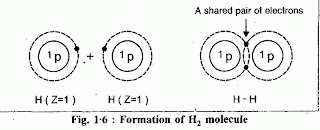
Diagram explains the way covalent bonds are created. Molecules connected by a covalent bond share their outer shell electrons to have their outer shell completely full. You can see that H has one non pair outer shell electron but when they connected the free electrons are now in the same shell connected.


5facts :

Elements are rarely found in their pure form. Elements usually form compounds which is a substance consisting of two different elements combined in a fix ratio.

Atoms are the smallest units of matter. They are the basic "building structures" throughout our bodies. They can be also radioactive that happens when they release energy and particles.

Radioactive isotopes can be very helpful. We use them to discover certain types of diseases and also they help us date archeological findings.

Chemical reaction make bonds and break them. Those changes lead to change in a composition of matter. Chemical reactions are obtaining most of the basic functions in our which means that if all chemical reactions would stop our body would stop too.

Hydrogen bonds are very specific for water due to these bonds water have different properties than it'd normally have without them. For example the water doesn't completely freeze in oceans which secures the survival of animals living in water.

Key terms :
pH scale - describes how acidic or basic a solution is. Our blood's pH is 7.4
acid - acidic solution have bigger amount of H+ than neutral solution
base - basic solution contains more OH- ions than neutral solution
solvent and solute - the dissolving agent is the solvent and the substance being dissolved is solute
element - substance that can't be broken down to other substances by ordinary chemical means
matter - everything is composed of matter, which is anything that occupies space and has mass
trace elements - elements found in body that are essential but are in a minute quantities
compound - substance consisting of two or more elements combined in fixed ratio
ion - is an atom or molecule with an electrical charge resulting from a gain or loss of one or more electrons
chemical bond - is when two atoms complete their outer shell

Video:

Summarize :
Chapter 2 describes elements, atoms and molecules. Also the difference between chemical bonds and their characteristics. Also a big part of this chapter talked about water and its specific characteristic such as: cohesion and adhesion, hydrogen bonds (very typical for water) and etc.... It also described pH scale and what this scale represents.


Monday, September 20, 2010

Chapter 1

Questions:
1. Why do we need hierarchy of organisms ?

We divide organisms from biggest to smallest and vice versa. It's because we need some kind of organization. If we would need to find a specific animal and we know where it lives it's easier for us to search for the specific animal in its community than to search through out the whole animal world . As well as if we're examining molecule as the smallest parts of our body we need the hierarchy to be able to describe what will the specific molecule form.

2. What is the chemical basis for all of life's kinship

It's DNA. The genetic material important for all living things. In DNA are hidden informations that forms life as we know. Everyday the DNA gives informations to the body as how to work and tells the body what is it supposed to do. New technologies allows us to solve the way DNA modifies our body. Now we can import DNA from one organism to another we're able to find potential diseases and many other things. That's the reason why is DNA and the study of DNA so important.

3. What are the three domains of life ?

Domain Bacteria and Domain Archaea. They both consists of prokaryotes (group of cells that lack cell's nucleus) They are microscopic. Bacteria are the most diverse and widespread prokaryotes. On the other hand many prokaryotes known as Archaea are living in extreme environments such boiling hot springs and salty water etc.
Domain Eukarya consists of eukaryotic cells (cells with complex structure including cell membrane). Into this group belong Kingdom Animalia, Kingdom Fungi, Kingdom Plantae etc...
Eukaryotic organism are more complex in structure.

Diagram :


This diagram describes the hierarchy of life. Especially this one describes the life forms from their smallest parts to their biggest. It also shows non-living particles of life.

5facts :

1. Hierarchy of organism is one big topic in biology. It categorizes all forms of life.
2. All life is divided into 3 domains of life. Domain Bacteria, Domain Archea and Domain Eukarya. Domains Bacteria and Archea are composed from eukaryotic cells, on the other hand Domain Eukarya is composed of eukaryotic cells.
3. Darwin's evolution theory was big progress in science as we know it today. This theory explains the diversity of life.
4. All forms of life have common features :
1. Order
2. Regulation
3. Growth and development
4. Energy processing
5. Response to the environment
6. Reproduction
7. Evolutionary adaptation
5. Cells are the functional units of life. Cell are the one the performing basically all life functions because everything is made out of cells.

Key terms:
Hypothesis - proposed explanation for a set of observations.
Theory - is much broader in scope. It explains a great diversity of observations and is supported by a large body of evidence. Good hypothesis leads to predictions.
Evolution - today living species are descendants of ancestral species. Author of this theory is Darwin. This theory talks about how all organism are going through evolution in order to survive in their enviroment.
DNA - genetic information responsible for heredity and for programming the production of an organism's molecules.
Cell - the basic unit of life, the lowest level of organization that can perform all activities required for life.
Emergent properties - "the whole is greater than sum" This means that the life form is composed of cells, however all cells can't do the same work as cell that composed other structures.
Natural selection - mechanism for evolution. This idea describes the way certain traits are eliminated from population to make the population stronger.
Darwin - scientist in 19th century. As his biggest contribution to the science was evolution theory and mechanism called natural selection.
Controlled experiment - experiment that compares experimental group with a control group.


Summarize:
Chapter 1 was introducing chapter in a way it describes the organizations of life, themes of
biology such as evolution. Also it introduces us to the definitions of theories and laws and
hypothesis. At the end of chapter we can read about the connection between biology and
technology and their influence in our everyday life.